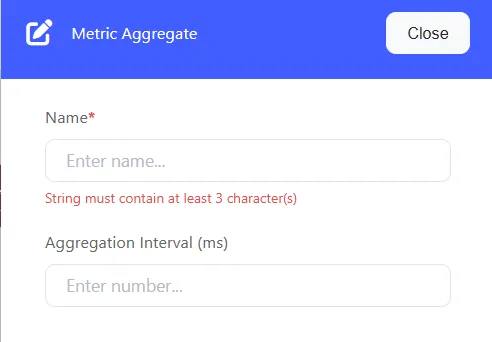
Aggregate
Aggregation refers to the process of combining, summarizing, or consolidating raw data to create more compact and manageable datasets, often in the form of aggregated metrics. This process involves transforming high-frequency or detailed data points into a condensed and more meaningful representation. Aggregation serves several important purposes in telemetry and monitoring systems:
Reducing Data Volume: Telemetry pipelines often deal with high volumes of data generated by various sources. Aggregation helps reduce the overall data volume by summarizing information over specific time intervals or based on certain criteria. This is crucial for managing storage, network bandwidth, and computational resources efficiently.
Improving Performance: Aggregated data is generally easier and faster to process than raw, high-frequency data. By aggregating information, telemetry systems can achieve better performance in terms of data processing, analysis, and reporting. This is particularly important for real-time monitoring and analytics.
Resource Optimization: Aggregation contributes to resource optimization by reducing the load on storage systems and databases. Storing aggregated metrics instead of raw data can lead to significant savings in terms of storage space.
Parameters
interval_ms
Optional: Defines the interval between flushes, in milliseconds.
Description: Metrics with the same series data (e.g., name, namespace, tags) are aggregated during this time frame.
Default: 10,000 ms (10 seconds).
Example: interval_ms: 5000 (5 seconds).
mode
Optional: Specifies the function used for aggregating metrics.
Description:
Some functions apply only to incremental metrics, while others are suitable for absolute metrics.
Enum options:
- Auto: Default. Sums incremental metrics and uses the latest value for absolute metrics.
- Count: Counts metrics for both incremental and absolute metrics.
- Diff: Returns the difference between the latest absolute value and ignores incremental metrics.
- Latest: Returns the latest value for absolute metrics, ignores incremental metrics.
- Max: Returns the maximum value of the absolute metric, ignores incremental metrics.
- Mean: Returns the mean (average) value for absolute metrics, ignores incremental metrics.
- Min: Returns the minimum value of the absolute metric, ignores incremental metrics.
- Stdev: Returns the standard deviation value for absolute metrics, ignores incremental metrics.
- Sum: Sums incremental metrics, ignores absolute metrics.
Default: Auto.
Example: mode: "Sum"