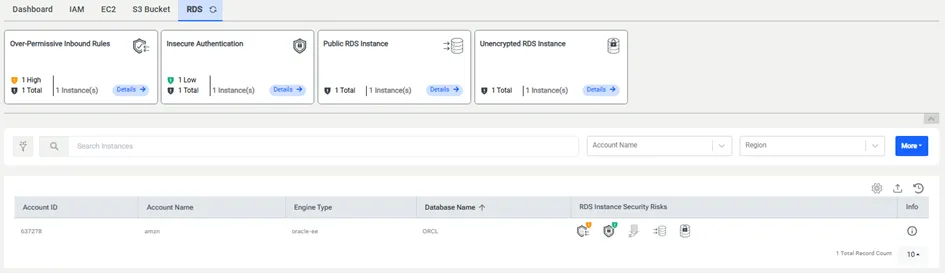
AWS RDS
AWS RDS tab includes:
· Security Risk Cards Section,
· Filter Section,
Data Table that containsExport Button, Refresh Button, Table Settings Button, Account ID, Account Name, RDS Instance Name, Engine Type, RDS Instance Security Risks, RDS Instance Class, Region (pre-selected, can be de-selected), Zone (pre-selected, can be de-selected), Security Groups (is shown, if it is selected in the table settings), IAM Roles Attached (is shown, if it is selected in the table settings), Host (is shown, if it is selected in the table settings), Port (is shown, if it is selected in the table settings), Storage Size (is shown, if it is selected in the table settings), Backup Retention Period (is shown, if it is selected in the table settings) and Info.
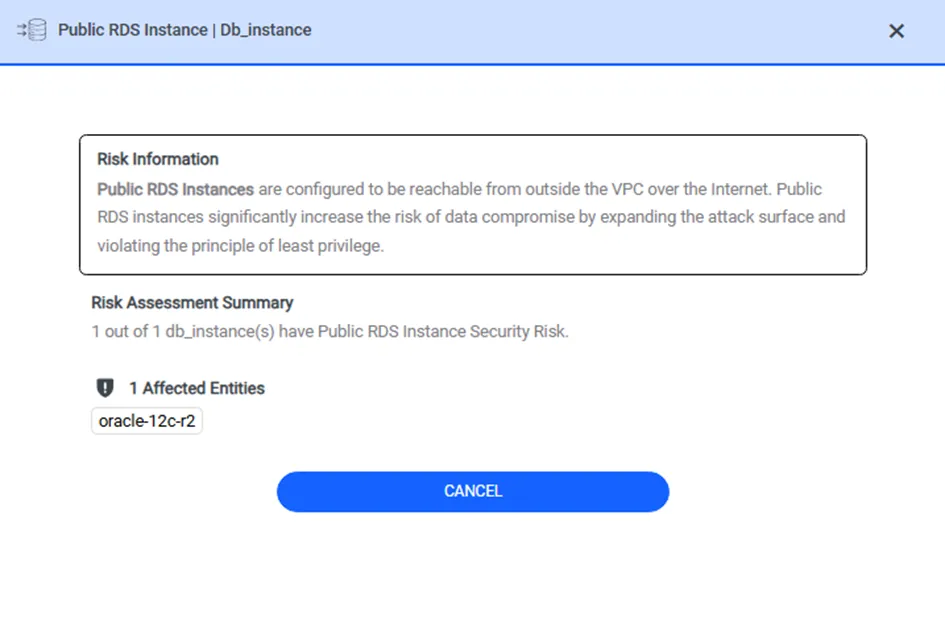
Once the user clicks the Details button on the security risk card, the modal window is opened. The modal window consists of risk information, risk assessment summary, and RDS Instances with severity levels, if the security risk has severity levels. If the security risk hasn’t any severity levels, the modal window only consists of risk information and risk assessment summary.

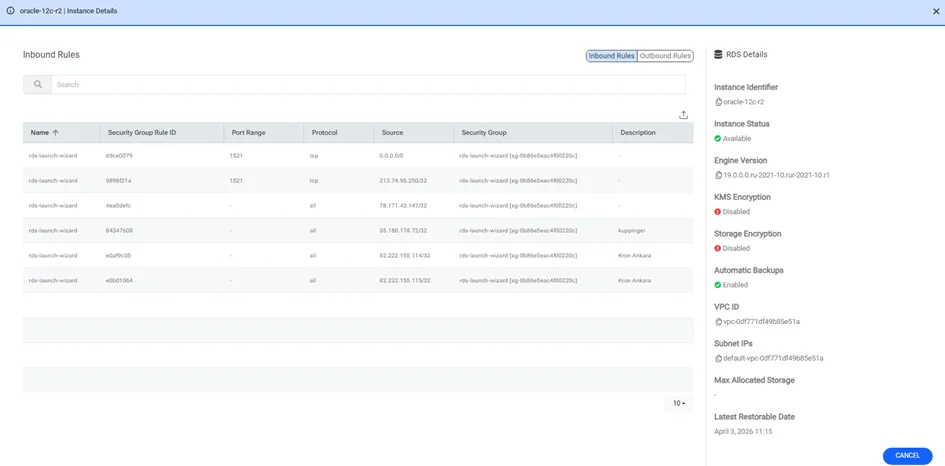
Once the Info button is clicked, the RDS Instance Information modal is opened. The modal has two subsections: the former (Security Group Rules) contains either Outbound or Inbound Rules, whereas the latter (RDS Instance Details) contains RDS instance details such as RDS Instance Identifier, RDS Instance Status, Engine Version, KMS Encryption Enabled, Storage Encrypted, Automatic Backups Enabled, VPC ID, Subnet ID, Max Allocated Storage, Latest Restorable Date and lastly Creation Date.