Azure AD Configuration
Log in to Azure Active Directory with a user who has the required administrative rights and follow the below steps to create a Single Connect application for SAML SSO.
- New Application.
- Create your Own application.
- Give a name for Single Connect.
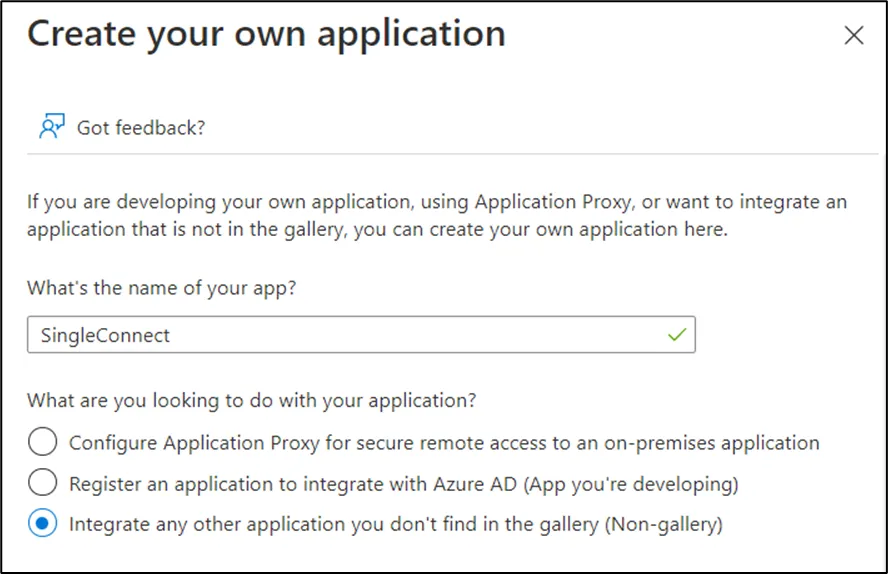
- Go to the newly created Single Connect Application.
- Choose Single Sign-on on the left pane.
- Choose SAML.
- Click edit for Basic SAML Configuration.
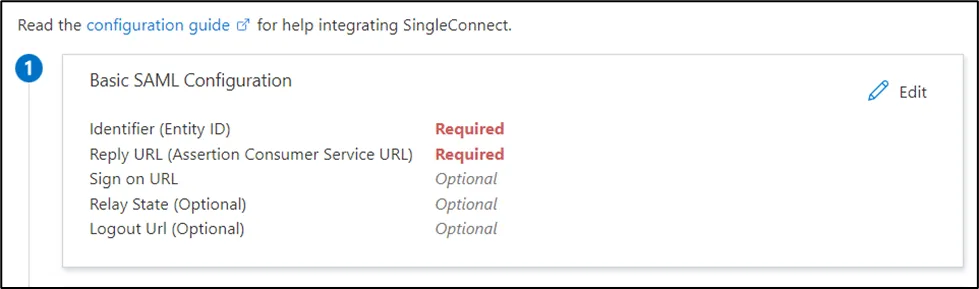
- Enter the information below according to the Single Connect Information.
- Note that the IP address of the Single Connect app will change according to your environment.
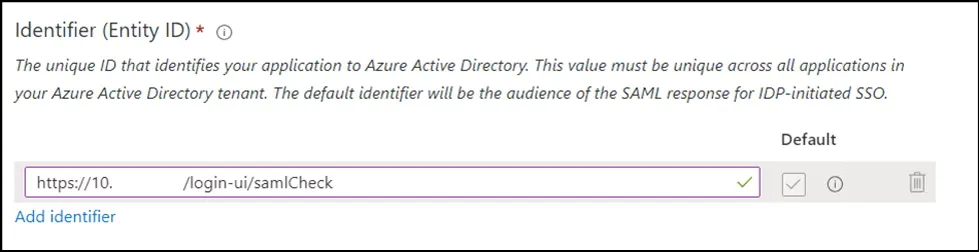
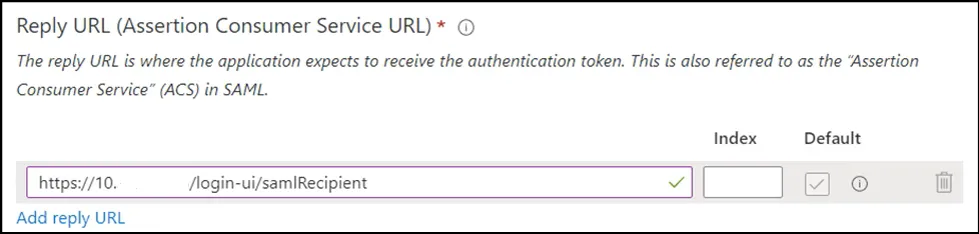
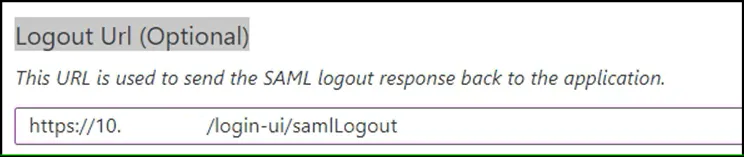
- Go to Step 3 for SAML Certificates.
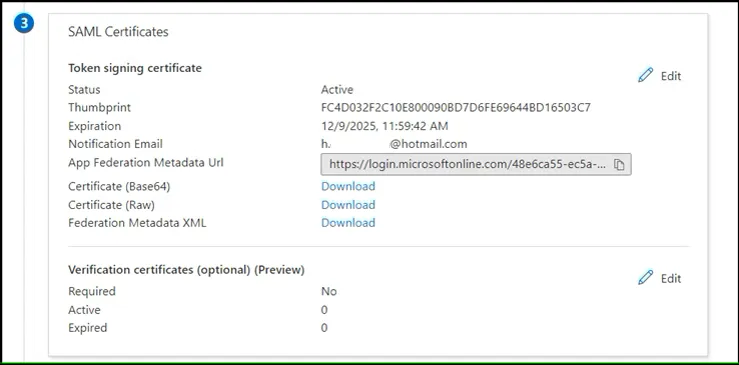
Download the Certificate (Base 64) and open it via notepad. Then copy it inside the notepad. We will paste it to the SAML configuration on Single Connect as SAML X509 Certf. Key
- Go to Step 4 for Single Connect Configurations.
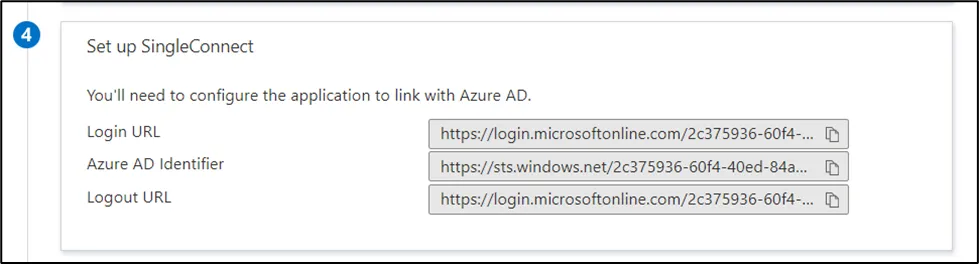
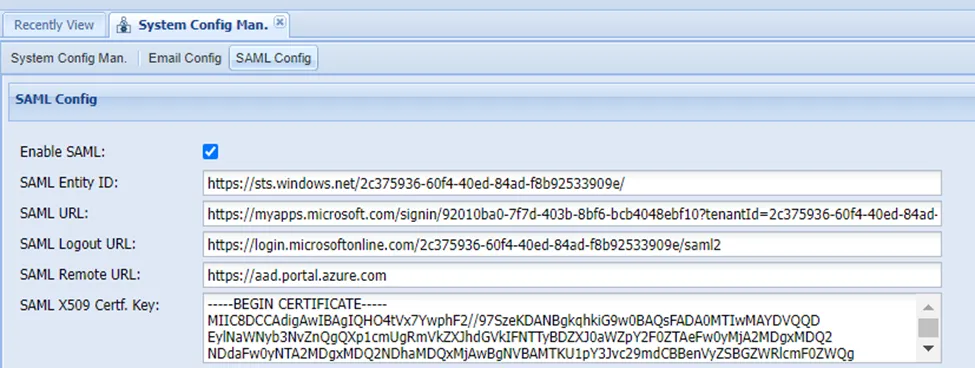
We will copy the above configurations and paste them as the Single Connect SAML configuration. The logout URL in Azure will be pasted as the Login Remote URL in the SAML configuration. The Azure AD Identifier will be pasted as SAML Entity ID in SAML in the SAML configuration.
- Go to Single Connect Properties.
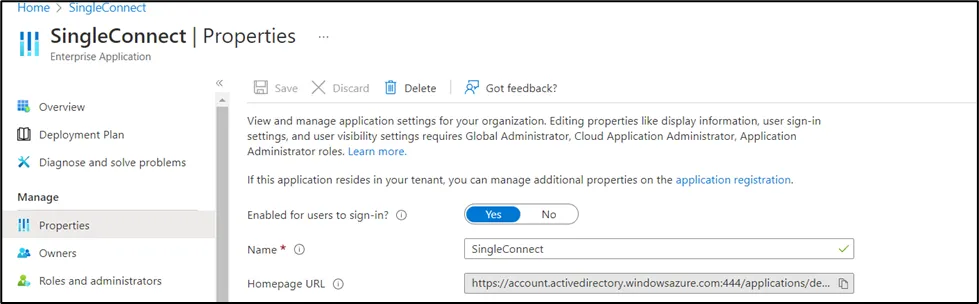
Copy the Homepage URL and paste it as the SAML URL in the Single Connect SAML configuration.
- At last, enter the Azure portal URL (https://aad.portal.azure.com) as the SAML Remote URL in the SAML configuration in Single Connect.
At the end of the configuration, the Singe Connect screen below will be displayed.
- To test the SSO go to the application on Azure and click Single Sign-on on the left pane then go to step 5, and click the button Test button.

A new, left side page will open to ask for the user who will log in to the application. If this user exists in the Single Connect application, you will log in with no need for credentials.